Ibrahim Azizi, invoking Article 51 of the Charter of the United Nations (which regulates the inherent right of a state to individual or collective self-defense), stated that “defeated Ukraine,” by providing support to the “Israeli regime” in the form of drone technologies, had in effect drawn itself into the war.6 By his logic, this made the entire sovereign territory of Ukraine a lawful and legitimate target for the armed forces of the Islamic Republic.6

This harsh rhetoric is not merely a diplomatic demarche or an emotional reaction to the crisis. It is a deliberate doctrinal step by Tehran that creates a quasi-legal basis for justifying possible direct missile strikes, sabotage, or terrorist acts against the territory of Ukraine, its diplomatic missions, or its economic interests abroad.
The fundamental logic of national security and state survival dictates that a state publicly threatened with missile strikes by a country sponsoring terrorism should not and has no right to wait for the physical realization of those threats.
Delay in such a situation is tantamount to an invitation to aggression. Ukrainian society and the military-political leadership must regard Azizi’s statement as a de facto declaration of war in the conditions of a hybrid global conflict, where formal notes are no longer delivered. The formation of an Expeditionary Corps to defend the international legal order and support allies in the Middle East is an asymmetric, fully proportionate, and legally justified response to the Iranian threat.
Ukraine as a Global Donor and Exporter of Security
In March 2026, President of Ukraine Volodymyr Zelenskyy officially confirmed that Kyiv had already sent three professional, fully equipped teams of military experts to the Middle East to counter Iranian drones.6 These specialists were deployed to Qatar, the United Arab Emirates, and Saudi Arabia.12 In addition, Ukrainian specialists and interception systems were involved in protecting U.S. military bases in Jordan.6
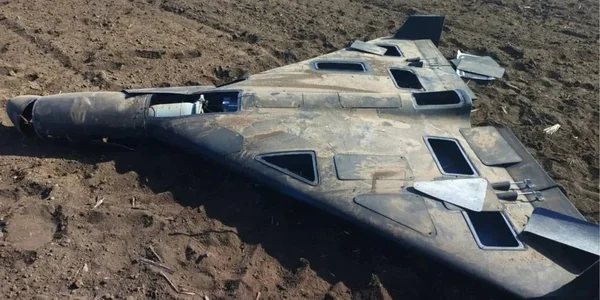
Eleven countries around the world, including European states, the United States of America, and Iran’s neighboring countries, have approached Kyiv with requests to obtain advanced Ukrainian expertise in air defense, electronic warfare (EW), and early warning systems.12
This transition from providing targeted consultations to a full-fledged, systematic military presence is a logical and inevitable step. An Expeditionary Corps, staffed by veterans and equipped with the latest Ukrainian interceptor drones, naval strike unmanned systems, and state-of-the-art EW systems, is capable of carrying out highly complex tasks. It can provide the level of protection and stabilization that is currently objectively beyond the reach of many regular Western armies, which have spent decades preparing for conventional wars of the past and lack real combat experience in modern, high-tech, asymmetric drone-swarm warfare.17
Khuzestan: a Center of Gravity, a Social Abyss, and the Key to Iran’s Future
To gain a deeper understanding of how the Ukrainian initiative can radically affect the stabilization of Iran and the weakening of its aggressive potential, it is necessary to analyze in detail the country’s most valuable geopolitical and economic asset — the southwestern province of Khuzestan. The historical and economic axiom of modern Iranian statehood is as follows: whoever controls Khuzestan controls Iran’s economy and future.
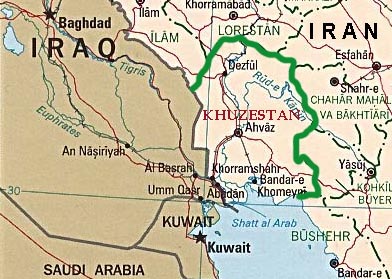
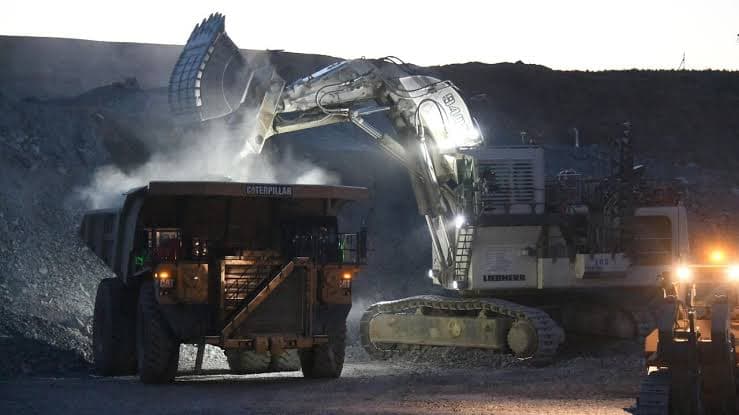
Khuzestan is one of Iran’s most resource-rich provinces, generating the lion’s share of the country’s oil and gas revenues. It is in this province that giant oil fields are concentrated, and the lion’s share (up to 90%) of Iranian oil exports passes through the terminal on Kharg Island, located in the immediate vicinity of the Khuzestan coast.19 However, this colossal wealth of the subsoil stands in stark contrast to the absolute poverty in which the local population is forced to survive.
The economic collapse that engulfed Iran in 2025–2026, caused by systemic lawlessness on the part of the central authorities, hyperinflation, elite corruption, and international sanctions, led to medical personnel, industrial workers, miners, and pensioners in Ahvaz (the provincial capital) and other cities finding themselves below the threshold of existential survival.21 In December 2025, Khuzestan’s medical community reached a boiling point. Employees of Jundishapur University of Medical Sciences gathered in front of the Khuzestan governor’s office for mass protests against chronic nonpayment of wages and appalling working conditions.21
Experienced nurses who have devoted 15–20 years of their lives to the healthcare system receive a meager salary of 18 million tomans, placing them far below the poverty line.21 When the governor tried to calm the crowd with empty promises, he was met with chants of: “Our tables are empty, your promises are useless.”21
Moreover, despite its location near major rivers, the province suffers from a catastrophic water shortage. Environmental degradation, flawed infrastructure planning, and the ruthless diversion of water resources to central Persian provinces have caused a water crisis that already triggered the first mass and bloody protests in mid-2021, which later only expanded in scale.20 The government in Tehran has traditionally relied exclusively on coercive force and brutal suppression of dissent, ignoring the fundamental structural problems of the economy.20
Ahvazi Arabs and Their Struggle for Self-Determination
Beyond economic hardship, Khuzestan is characterized by a complex ethnic composition. It is the historical homeland of a large Arab minority — the Ahvazis — who for decades have suffered systemic, institutionalized discrimination at the hands of the Persian majority and the Islamic government. Tehran’s official policy has been deliberately aimed at changing the region’s demographic and ethnic composition. Documented cases of forced assimilation, bans on the use of Arabic in schools and public life, suppression of Arab culture, and confiscation of ancestral Arab agricultural lands in favor of settlers from Iran’s northern and central regions are the norm.24 Thousands of activists have been thrown into prisons on fabricated charges of “separatism” or “threatening territorial integrity.”24
Against the backdrop of the 2026 war and the sharp weakening of central government control, Ahvazi Arab political forces demonstrated an extraordinary capacity for consolidation. In February 2026, a historic event took place: leading Ahvazi organizations united into a single Coordination Council of Ahvazi Organizations (CCAO).25 This step was aimed at overcoming years of fragmentation and preparing for a transition of power in Iran.25
Subsequently, the Council expanded to eight influential organizations, and in March 2026 they issued the “London Declaration” under the slogan “Ahvaz Above All.”26
The national forces of Ahvaz directly hold the Iranian regime responsible for the war and demand the immediate withdrawal of Iranian military facilities and missile bases from their cities in order to protect the civilian population from bombardment and the consequences of war.27
The Role of the Ukrainian Corps in Stabilizing Khuzestan
Under these difficult conditions, the Ukrainian Expeditionary Corps could perform a unique stabilization, peacekeeping, and humanitarian mission in Khuzestan.
Since the Ahvazi political opposition officially declares its openness to engagement with the international community and its aspiration for a peaceful transition without chaos or violence 26, the presence of a highly qualified foreign contingent (which Ukrainian veterans are), operating under the aegis of human rights protection, stabilization, or under bilateral agreements with a coalition of Arab states, would make it possible to achieve several strategic objectives:
- Creation of a reliable “security umbrella” over the cities of Khuzestan through Ukrainian UAV interception systems and mobile air defense groups. This would protect civilians both from Israeli or American strikes on the remnants of Iranian infrastructure and from chaotic retaliatory actions by scattered units of the Islamic Revolutionary Guard Corps (IRGC) or other proxy groups.
- Prevention of the destruction of oil extraction and refining facilities by terrorist groups, looters, or local smugglers.29 The stable operation of these facilities is vital to preventing the collapse of the global economy.
- Veterans of the Armed Forces of Ukraine, who have real experience in patrolling, clearing operations, demining, and interaction with civilian populations in high-risk zones (in the de-occupied territories of Ukraine), could help maintain public order during the transition period. An important psychological factor is that Ukrainians do not carry a historical colonial burden in the Middle East, which local populations often justifiably reproach traditional Western contingents for (for example, the United States or the United Kingdom).
Why Is This Critically Important Right Now?
The formation of an Expeditionary Corps from Ukrainian veterans is not merely a military-strategic step, but also a deeply sociological project that perfectly corresponds to the urgent social demands both within Ukraine itself and in Middle Eastern states.
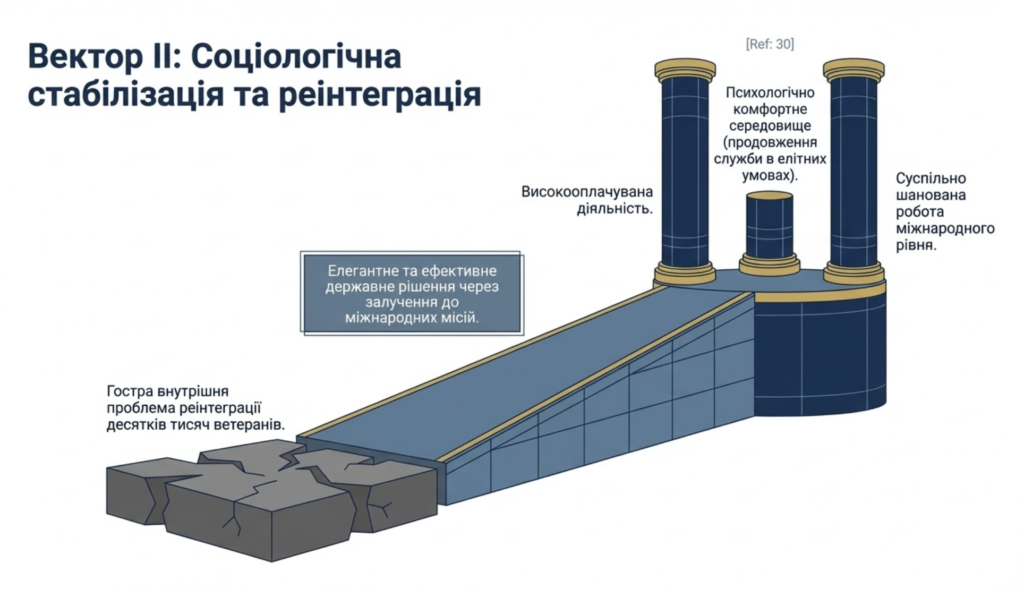
The creation of an official, legal, and highly paid Expeditionary Corps for overseas missions solves a whole set of problems at once:
- Contracts in the Middle East, paid for by wealthy Gulf states or international institutions, will allow veterans to earn a dignified income, support their families, and invest their earnings in the Ukrainian economy upon return.
- For many professional soldiers, the abrupt transition to civilian life is traumatic; they experience a loss of meaning and adrenaline. Service in the Expeditionary Corps, where their unique, blood-earned skills are critically needed and deeply respected by foreign partners, will help channel their combat experience into a constructive, security-building direction.
- According to surveys, Ukrainian society traditionally maintains the highest level of trust in the Armed Forces and veterans, while holding the worst view of corrupt officials.31 Participation in an international peacekeeping or stabilization mission of global scale will only strengthen this elite status of the warrior-protector, who now defends not only his country but also global peace.
The emergence of Ukraine as a neutral, independent provider of security, free from Western political diktat yet highly combat-capable, is viewed by local elites with great interest and enthusiasm.12 Ukraine has no imperial or religious ambitions in the Middle East, which makes it an ideal pragmatic partner. It is worth recalling that the political and legal foundation for this has already been laid: as early as 2018, Ukraine and Kuwait signed an intergovernmental agreement and a Memorandum of Understanding on military cooperation, which explicitly provided for joint research, production, and sale of defense equipment.39
The rapid deployment of the Ukrainian Corps to logistics bases in Kuwait is a logical implementation of these existing arrangements under conditions of extreme crisis.
Total Rejection of Tyranny
Looking at the situation inside Iran itself, we see a society ready to overthrow the existing order. The combination of a severe economic crisis, corruption, and brutal repression led to permanent anti-government protests that spread to more than 210 cities across all 31 provinces of Iran already in late 2025 and early 2026, even before the external conflict began.21 Iranians took to the streets, outraged by the devaluation of the rial and impoverishment.4
The war worsened the situation exponentially. The government imposed a strict blackout, cutting the country off from the international internet (ordinary citizens’ access to the network fell to 1%), which intensified panic and isolation; human rights defenders and Iranians themselves equate such actions with war crimes, since people cannot receive warnings about bombardment.5 The elimination of Ali Khamenei led to the creation of a temporary governing council (which included President Masoud Pezeshkian and the notoriously brutal head of the judiciary, Gholam-Hossein Mohseni-Ejei), but this did not bring stability to the regime.4 According to UN estimates, up to 3.2 million people in Iran became internally displaced due to the hostilities.4 The so-called Iranian “Axis of Resistance” (proxy forces in the region such as Hezbollah and the Houthis) fell into organizational chaos, preoccupied with their own survival more than with defending Tehran.4
In this situation, the presence of a disciplined stabilization contingent oriented toward Western democratic values (which the Ukrainian corps objectively is) in key regions would be welcomed by the pro-Western segment of Iranian society and oppressed ethnic minorities not as hostile occupation, but as salvation from the tyranny of the IRGC, the chaos of civil war, and a humanitarian catastrophe.
Dominance in the Air, on Land, and at Sea
Ukraine’s military-industrial complex and practical combat experience have reached such a level of innovation that surplus technological capacity and expertise can be effectively exported without harming the domestic front.17

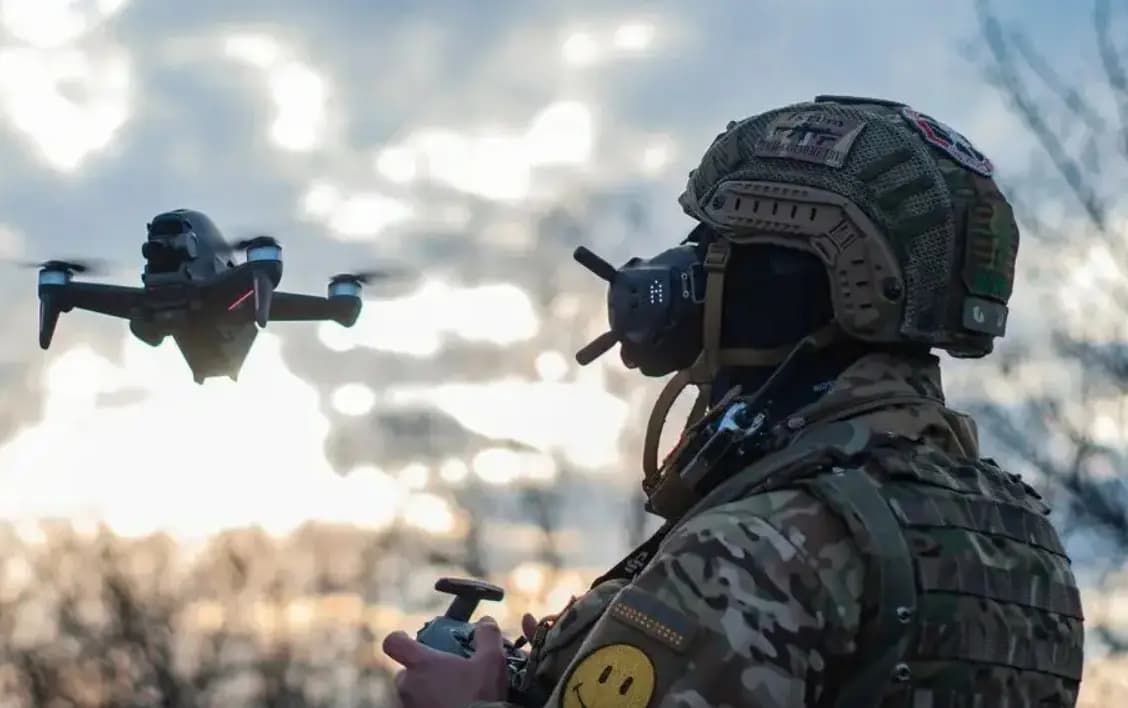
The war in Ukraine has rewritten the global rules of air defense and aerial warfare.18 Faced with constant attacks by tens of thousands of Iranian “Shaheds,” which Russia has used to terrorize Ukrainian cities since 2022, Kyiv was forced to develop extremely effective and, most importantly, economically asymmetric interception systems. Ukrainian engineers created high-speed interceptor drones costing only about $1,000. This makes it unnecessary to use traditional air defense missiles costing millions of dollars to shoot down cheap drones.38
The production capacity of Ukrainian defense tech amazes global analysts. One major Ukrainian manufacturer, SkyFall, has officially stated its ability to produce up to 50,000 interceptor drones per month. Of these, 5,000 to 10,000 units can be easily exported to meet allies’ needs while fully satisfying the internal requirements of Ukraine’s Defense Forces.43 Deploying specialized teams of veteran operators in combination with these advanced technologies will make it possible, in the shortest possible time, to establish over Kuwait, the UAE, and part of Iran a virtually impenetrable integrated shield against any aerial threats from the IRGC.
President Zelenskyy rightly noted a key nuance: even if foreign partners somehow obtain the interceptor drones themselves, they will not be able to use them effectively without Ukraine’s specific combat experience, detection algorithms, and mobile group tactics.13 U.S. Secretary of Defense Pete Hegseth noted that after the deployment of advanced interception systems and the first consultations, the intensity of Iranian missile strikes fell by 90%, and the effectiveness of kamikaze drone attacks declined by 95%.35 These figures unequivocally prove that the Ukrainian approach works and saves lives.
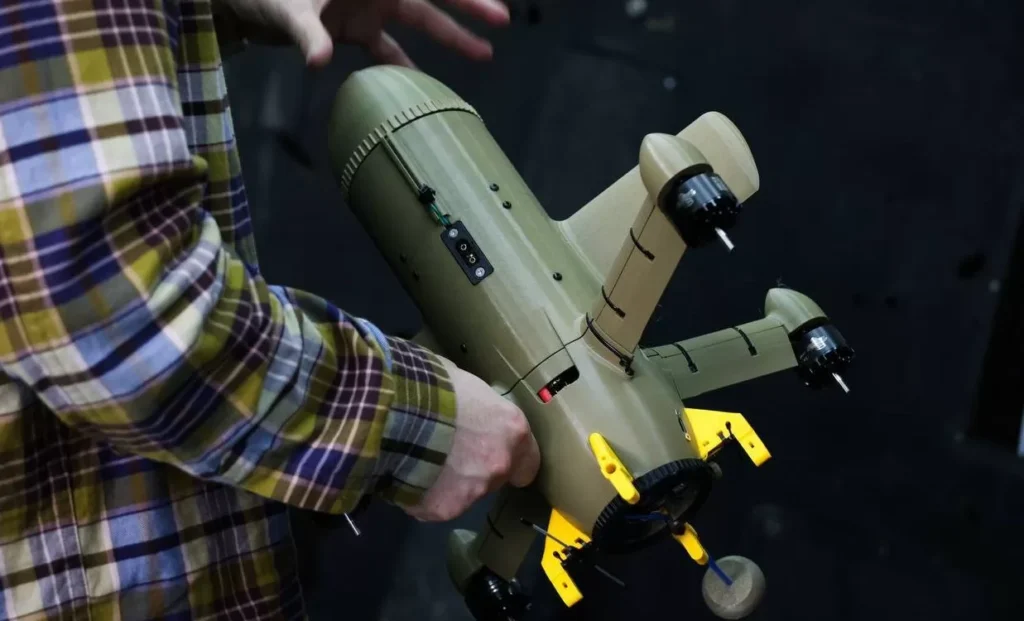
Without a classic large surface fleet, Ukraine has proven its absolute ability to dominate at sea through innovative surface and underwater strike unmanned systems (for example, Magura-type platforms).44 The Iranian regime has historically and systematically used the narrow Strait of Hormuz to blackmail the global economy by attacking commercial vessels, seizing tankers, and mining shipping lanes.19
The Ukrainian Expeditionary Corps, relying on naval bases in allied Gulf states, is capable of rapidly deploying an echeloned network of floating acoustic sensors and strike-reconnaissance naval drones. Such a system would make it possible not only to conduct round-the-clock monitoring of the maritime area, but also to respond immediately and kinetically to attempts by Iranian speedboats or underwater saboteurs to approach oil tankers. This would guarantee the security of freedom of navigation and the protection of critical coastal infrastructure (including vital desalination plants), which is an absolute national security priority for Kuwait and the UAE.
Thousands of Ukrainian veteran servicemen have acquired hard, unique experience in conducting intense combat operations in densely urbanized terrain, organizing complex logistics under constant massive enemy fire, and carrying out stabilization and filtration measures in de-occupied territories. This combat experience makes them ideal candidates for expeditionary police and peacekeeping operations, where tactical flexibility, the individual initiative of junior commanders, deep understanding of asymmetric threats, and demining skills matter far more than mere massive, blind firepower.
Economic Space

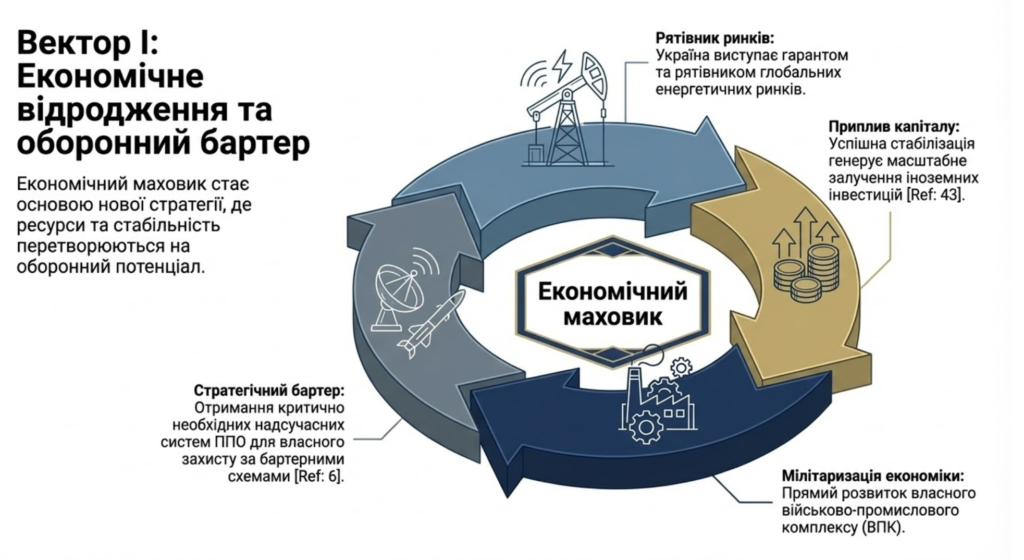
The war in the Middle East is not merely a regional conflict; it is a global shock that directly and painfully affects Ukraine’s economic and security interests, while simultaneously opening a window of unprecedented geostrategic opportunities.
The military conflict has paralyzed shipping through the Strait of Hormuz, triggering the largest disruptions to oil supplies to global markets. The International Energy Agency (IEA) stated that the world is facing “the largest oil supply disruption in history.”19 Gas prices in Europe immediately surged by 50%.46 Expensive oil and expensive gas are precisely the financial lifeblood that allows the Russian war machine to continue financing aggression against Ukraine.47
The economic logic here is ruthless and straightforward: rapid stabilization of oil production in Iran’s Khuzestan and the unblocking of maritime trade routes in the Persian Gulf through the decisive efforts of the Ukrainian Corps will have a direct, powerful macroeconomic effect. It will lead to a sharp fall in global oil prices and, as a consequence, to a catastrophic depletion of the Russian Federation’s state budget. Therefore, Ukraine has a direct, vital interest in the swift restoration of security for the Middle East’s energy infrastructure.
Monetizing Defense Innovation and Acquiring Weapons
Ukraine’s defense-tech sector, which in recent years has transformed from a conservative state monopoly into an innovation driver, has become one of the most dynamic segments of the national economy, comprising more than 600 companies.48 Providing systematic airspace protection services to wealthy countries such as Kuwait and the UAE (which suffer material losses from shelling every day) is strategically advantageous. Ukraine gains the opportunity to monetize its unique experience by concluding large-scale, multimillion-dollar government contracts.
Moreover, this initiative creates a powerful geopolitical lever for Kyiv in dialogue with Washington and Brussels. President Zelenskyy has already openly emphasized that, in exchange for transferring unique experience and drone interception systems, Western partners and Gulf countries should provide Ukraine with critically scarce missiles for air defense systems (including the expensive PAC-2 and PAC-3 interceptors for Patriot systems), which are urgently needed to protect Ukrainian cities from Russian ballistic missiles.6 National security requires pragmatism: by helping protect from war those who are able to help us with resources, Ukraine brings closer victory and a just end to its own war.38
Corps Deployment Strategy
In order for the Expeditionary Corps to be as effective as possible and not turn into a political declaration, its phased deployment must follow a clear operational model.
Phase 1: Establishment of Forward Operating Bases (Kuwait and the UAE)
Given the deep existing bilateral military ties and the loyalty of the elites 39, Kuwait is the optimal location for deploying the general headquarters and main logistics hub of the Ukrainian Expeditionary Corps. The primary task in this phase will be the creation of joint counter-drone centers.7 Drawing on the colossal empirical experience gained during the repulsion of massive nighttime “Shahed” raids in Ukraine 38, Ukrainian military engineers and tacticians will deploy a deeply echeloned, multi-layered network of acoustic sensors, mobile fire groups (MFGs), and powerful EW stations to reliably protect the skies over key facilities: international airports, ports, oil terminals, and water treatment plants of the host countries.
Phase 2: Maritime Dominance and Area Patrol
The second operational echelon will consist entirely of experienced specialists from the Naval Forces of Ukraine and operators of naval unmanned strike systems. Their main mission is to patrol the waters from the coast of Kuwait to the strategic Strait of Hormuz. The use of high-speed, low-observable kamikaze drones and reconnaissance unmanned boats will make it possible to detect and neutralize in advance the threat posed by the Iranian “mosquito fleet” (IRGC speedboats), ensuring the completely safe passage of large commercial vessels and neutralizing one of the main strategic advantages of Iran’s asymmetric maritime doctrine.33
Phase 3: Stabilization and Peacekeeping Presence in Khuzestan
The third, most difficult phase will be implemented only if the central authority in Tehran collapses, the security situation in the region rapidly deteriorates, or after receiving an appropriate UN mandate or a coalition of allies. It envisages the direct deployment of a Ukrainian contingent into Iran’s Khuzestan. Building on prior diplomatic arrangements with the Coordination Council of Ahvazi Organizations 25, Ukrainian military personnel could act as objective, impartial security guarantors for the entire civilian population, regardless of ethnicity.
This stabilization mission will include:
- Large-scale demining of territories abandoned by Iranian forces.
- Armed protection of oil extraction facilities from sabotage and looting.
- Taking control of and protecting critical hydraulic infrastructure, vital for overcoming the catastrophic water crisis.20
- Providing expert assistance in training new local self-defense and police forces based on Western law-enforcement standards and strict respect for human rights.
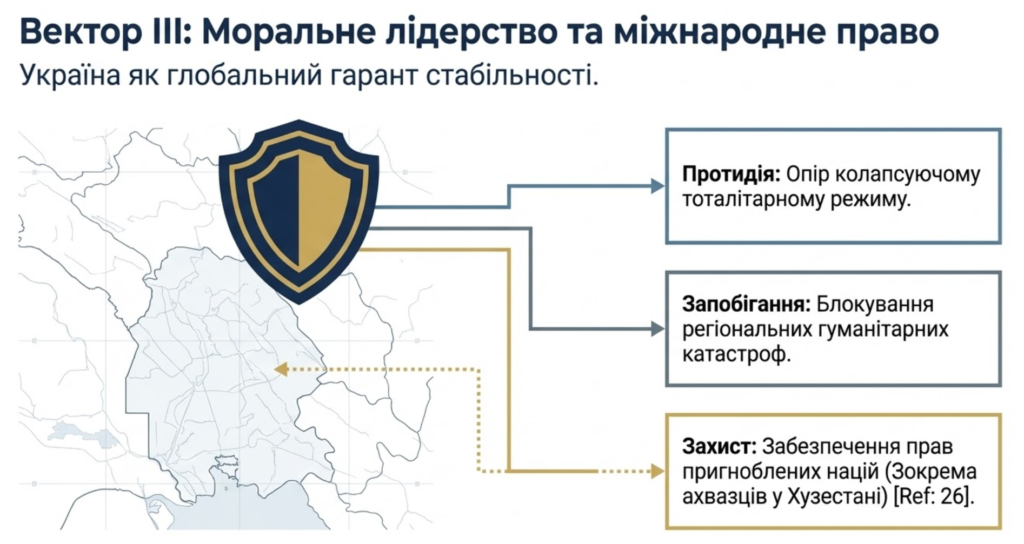
Such a structured approach will make it possible to prevent anarchy, outbreaks of ethnic cleansing, and a mass humanitarian catastrophe involving millions of refugees, which international analysts unanimously predict in the event of an uncontrolled, violent collapse of the Iranian state.28
Shaping Ukraine’s New Global Role
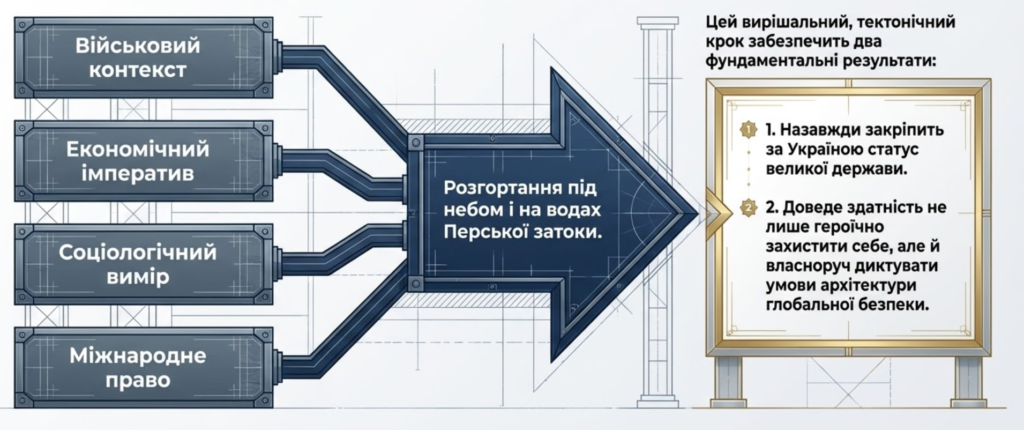
The creation of an Expeditionary Corps from battle-hardened Ukrainian veterans to stabilize the situation in Iran and protect strategic allies (Kuwait, the UAE, Saudi Arabia) is not a political adventure or a dispersal of forces; it is a deeply rational, multi-layered geostrategic move with a colossal multiplier effect.

First, in the military-strategic dimension, Ukraine gains the opportunity to bring the war onto enemy territory, destroying the industrial capacity for supplying weapons to the Russian Federation and dispersing the attention of Moscow’s allies.
Second, in economic terms, Ukraine acts as a savior of global energy markets, develops its own military-industrial complex through foreign investment 43, and receives critically needed state-of-the-art air defense systems for its own protection through barter.6
Third, in sociological terms, the State elegantly and effectively solves the acute internal problem of reintegrating tens of thousands of veterans by providing them with highly paid, psychologically comfortable, and socially respected international-level work.30
Fourth, in international legal and moral terms, Ukraine acts as a global guarantor of stability, protecting the rights of oppressed nations (including the Ahvazis in Khuzestan) 26 from a collapsing totalitarian regime and preventing humanitarian catastrophes.
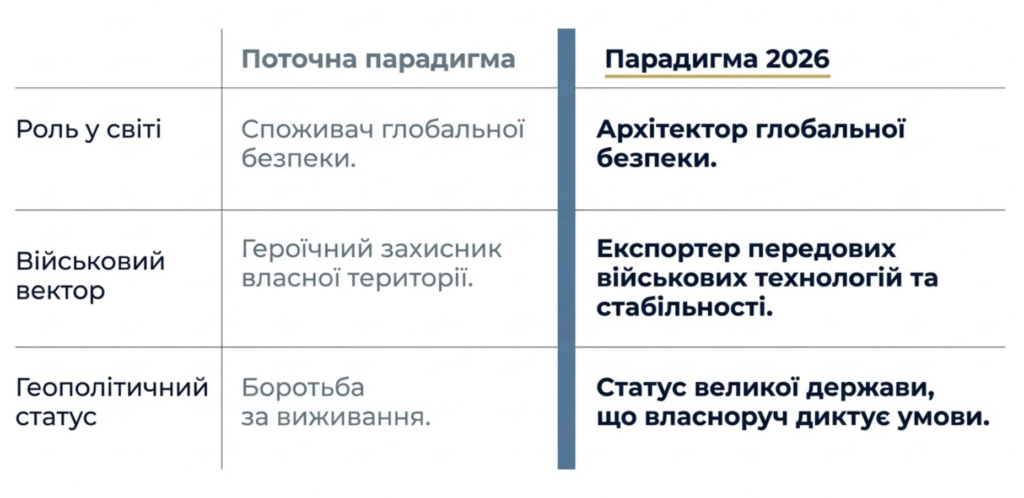
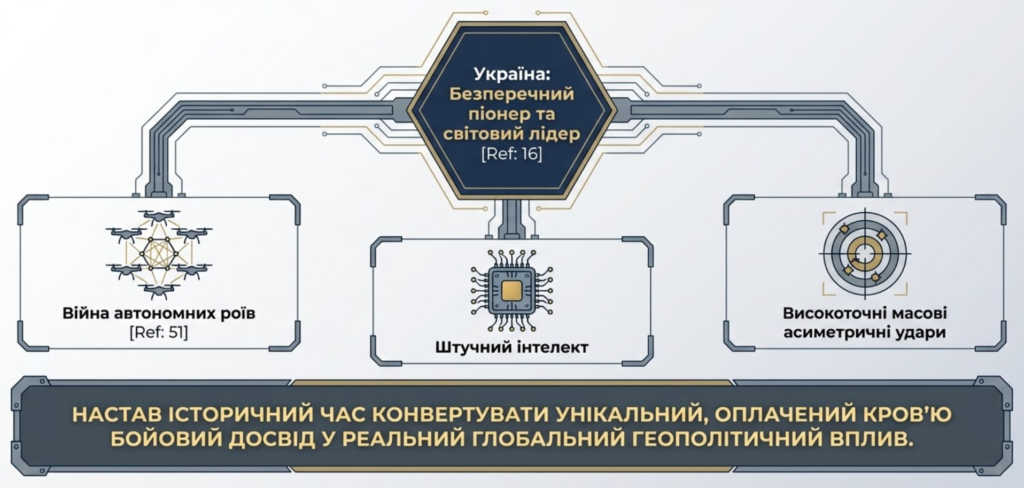
The Middle East in 2026 has become that ruthless arena where the new rules of future warfare are being tested and written — warfare of autonomous swarms, artificial intelligence, and high-precision mass asymmetric strikes.51 Ukraine is the undisputed pioneer and recognized world leader in this new, brutal era.16
The historical time has come to convert this unique, blood-paid combat experience into real global geopolitical influence.
The deployment of the Ukrainian Expeditionary Corps under the skies and on the waters of the Persian Gulf will be the decisive, tectonic step that will forever entrench for Ukraine the status of a great power capable not only of heroically defending itself, but also of dictating the terms of the global security architecture.
Igor Akimov, social engineer, Director of the Institute of Social Dynamics and Security KRONOS

Hennadii Petrov, expert at the Institute of Social Dynamics and Security KRONOS
The investigation actively used OSINT tools and artificial intelligence, including the Gemini and Grok models. OSINT methods made it possible to collect and analyze open data from various sources, including social networks, public databases, and web resources. Gemini provided in-depth analysis of textual data, pattern detection, and forecasting, while Grok, created by xAI, was used to process complex queries and generate accurate conclusions based on large volumes of information. The combination of these technologies made it possible to significantly accelerate the investigation process, improve the accuracy of the results obtained, and identify connections that might have remained unnoticed by traditional methods.
Sources
- Why the Iran war has caught Gulf states in a bind, https://www.972mag.com/gulf-states-iran-war-military-dependence/
- Emergency Meeting on the Military Escalation in the Middle East – Security Council Report, https://www.securitycouncilreport.org/whatsinblue/2026/02/emergency-meeting-on-the-military-escalation-in-the-middle-east.php
- 2026 Iran war – Wikipedia, https://en.wikipedia.org/wiki/2026_Iran_war
- Iran | Iran | Today’s latest from Al Jazeera, https://www.aljazeera.com/where/iran/
- Iran launches drones and missiles at Saudi Arabia, Kuwait and UAE, https://www.iranintl.com/en/202603107256
- Iran threatens to make Ukraine a military target if it helps Israel | Ukrainian News – LIGA.net, https://news.liga.net/en/politics/news/ukraine-will-become-a-legitimate-target-of-iran-if-it-helps-israel-head-of-the-national-security-commission
- Iranian official says Ukraine ‘legitimate target’ over drone support to Israel – Türkiye Today, https://www.turkiyetoday.com/region/iranian-official-says-ukraine-legitimate-target-over-drone-support-to-israel-3216233
- US strikes over 90 Iranian military targets on Kharg, fire breaks out at UAE port, https://www.telegraphindia.com/world/us-israel-versus-iran-war-day-fifteen-live-updates/cid/2151278
- Iranian Lawmaker Says Ukraine ‘Legitimate Target’ Over Alleged Drone Support For Israel – Kyiv Post, https://www.kyivpost.com/post/71931
- Иран назвал Украину своей «законной целью». В Киеве ответили, что Тегеран «обучил россиян убивать украинцев», https://meduza.io/news/2026/03/14/iran-nazval-ukrainu-svoey-zakonnoy-tselyu-v-kieve-otvetili-chto-tegeran-obuchil-rossiyan-ubivat-ukraintsev
- Iranian Lawmaker Says Ukraine Could Become “Legitimate Target” – The European Conservative, https://europeanconservative.com/articles/news-corner/iranian-lawmaker-says-ukraine-could-become-legitimate-target/
- Zelensky says Ukrainian drone experts to visit Qatar, UAE, Saudi Arabia this week, https://www.timesofisrael.com/zelensky-says-ukrainian-drone-experts-to-visit-qatar-uae-saudi-arabia-this-week/
- Ukraine sends experts to Qatar, Saudi Arabia, UAE amid Iranian drone strikes, https://kyivindependent.com/ukraine-sends-drone-experts-to-qatar-saudi-arabia-uae/
- Ukraine sending three teams of military experts to Middle East, Zelenskyy says, https://www.pravda.com.ua/eng/news/2026/03/10/8024849/’
- US Doesn’t Need Ukraine’s Drone Defense Help, Trump Says – Kyiv Post, https://www.kyivpost.com/post/71904
- Ukraine’s experience is indispensable in the fight against Iranian drones – Atlantic Council, https://www.atlanticcouncil.org/blogs/ukrainealert/ukraines-experience-is-indispensable-in-the-fight-against-iranian-drones/
- Ukraine’s Combat Experience Drives Innovation in Partnership with Western Militaries – Kyiv Post, https://www.kyivpost.com/post/71408
- Drone superpower: Ukrainian wartime innovation offers lessons for NATO – Atlantic Council, https://www.atlanticcouncil.org/blogs/ukrainealert/drone-superpower-ukrainian-wartime-innovation-offers-lessons-for-nato/
- Energy News | Top Energy Headlines | Reuters, https://www.reuters.com/business/energy/
- Iran’s Khuzestan: Thirst and Turmoil | International Crisis Group, https://www.crisisgroup.org/rpt/middle-east-north-africa/gulf-and-arabian-peninsula/iran/241-irans-khuzestan-thirst-and-turmoil
- Strikes Persist in Iran’s Industrial and Health Sectors as Economic Pressure Mounts – NCRI, https://www.ncr-iran.org/en/news/iran-protests/strikes-persist-in-irans-industrial-and-health-sectors-as-economic-pressure-mounts/
- 2025–2026 Iranian protests – Wikipedia, https://en.wikipedia.org/wiki/2025%E2%80%932026_Iranian_protests
- Iran economy contracts despite modest oil growth as inflation and rial slide, https://www.iranintl.com/en/202512280124
- Ahwazi: Dossier of Human Rights violations and abuses by the Iranian Government against the indigeno – – UNPO, https://unpo.org/ahwazi-dossier-of-human-rights-violations-and-abuses-by-the-iranian-government-against-the-indigeno/
- Ahwazi groups unite ahead of post-Iranian regime transition – MEO, https://middle-east-online.com/en/ahwazi-groups-unite-ahead-post-iranian-regime-transition
- PADMAZ – Patriotic Arab Democratic Movement in Ahwaz, https://padmaz.org/en/
- Statement issued by the Ahwazi National political organisationsRegarding the Ongoing Conflict Between the Iranian Regime and Israel – PADMAZ, https://padmaz.org/en/?p=941
- Ahwazi groups unite ahead of post-Iranian regime transition | MEO, https://middle-east-online.com/node/805606
- A Worst-Case Scenario for the War with Iran – War on the Rocks, https://warontherocks.com/2026/03/a-worst-case-scenario-for-the-war-with-iran/
- Portrait of a Veteran 2025: Problems Facing War Veterans in Ukraine. Joint study by Rating Group and the Ukrainian Veterans Fund of the Ministry of Veterans Affairs, https://www.ratinggroup.ua/en/news/veteran-portrait-2025
- Ukrainians have best attitude toward military and veterans, worst toward collaborators and corrupt officials — poll – Interfax-Ukraine, https://en.interfax.com.ua/news/press-conference/1150772.html
- Ukraine: Faith in US Dwindles But We Won’t Fold – CEPA, https://cepa.org/article/ukraine-faith-in-us-dwindles-but-we-wont-fold/
- ‘Worst nightmare’: anger and frustration as Gulf states bear brunt of war they did not start, https://www.theguardian.com/world/2026/mar/14/gulf-strait-of-hormuz-nightmare-anger-frustration-at-us
- U.S. Security Cooperation with Kuwait – United States Department of State, https://www.state.gov/u-s-security-cooperation-with-kuwait-2
- Iran Update Evening Special Report, March 13, 2026 | ISW, https://understandingwar.org/research/middle-east/iran-update-evening-special-report-march-13-2026/
- Kuwait | arabtimes, https://www.arabtimesonline.com/news/category/kuwait/
- Majority of Americans oppose military action in Iran, new poll finds | PBS News, https://www.pbs.org/newshour/politics/majority-of-americans-oppose-military-action-in-iran-new-poll-finds
- US and Mideast Countries Seek Kyiv’s Drone Expertise as Russia-Ukraine Talks Put On Ice, https://www.military.com/daily-news/2026/03/05/us-and-mideast-countries-seek-kyivs-drone-expertise-russia-ukraine-talks-put-ice.html
- Ukraine and Kuwait sign military cooperation agreement – Army Technology, https://www.army-technology.com/news/ukraine-kuwait-sign-military-cooperation-agreement/
- Historical and Legal Analysis of Interstate Military Agreements and their Influence on the processes of the Establishment of the State of Ukraine – Redalyc, https://www.redalyc.org/journal/279/27957591005/html/
- Kuwait, Ukraine sign agreement for military & security cooperation – Defence Blog, https://defence-blog.com/kuwait-ukraine-sign-agreement-military-security-cooperation/
- Zelenskiy says Ukraine has unique drone experience, discusses joint production with Dutch PM | WKZO | Everything Kalamazoo | 590 AM, https://wkzo.com/2026/03/08/zelenskiy-says-ukraine-has-unique-drone-experience-discusses-joint-production-with-dutch-pm/
- Russian Offensive Campaign Assessment, March 8, 2026 | ISW, https://understandingwar.org/research/russia-ukraine/russian-offensive-campaign-assessment-march-8-2026/
- This New Company Will Build Ukraine’s Deadly Drone Boats For Western Militaries, https://www.youtube.com/watch?v=a7yVQUnpJUo
- US says it destroyed 16 mine-laying vessels as Iran threatens to block Gulf oil exports, https://apnews.com/article/iran-israel-us-march-10-2026-acf2af139d179fbef62927a8bf9bea55
- Gulf Situation Assessment: Iran’s Attacks on Arab States Will Backfire – JINSA, https://jinsa.org/jinsa_report/gulf-situation-assessment-irans-attacks-on-arab-states-will-backfire/
- From Tehran to Donbas: What the Iran War Means for Russia and Ukraine, https://www.fpri.org/article/2026/03/from-tehran-to-donbas-what-the-iran-war-means-for-russia-and-ukraine/
- Ukraine’s defense tech sector can play a key role in economic security – Atlantic Council, https://www.atlanticcouncil.org/blogs/ukrainealert/ukraines-defense-tech-sector-can-play-a-key-role-in-economic-security/
- EU DEFENCE: – IRIS, https://www.iris-france.org/wp-content/uploads/2019/04/ProgEurope_2019_03_MAURO-6-_EN.pdf
- EU Defence: The White Book implementation process – European Parliament, https://www.europarl.europa.eu/RegData/etudes/STUD/2018/603871/EXPO_STU(2018)603871_EN.pdf
- First Ukraine, Now Iran: A New Era of Drone Warfare Takes Hold | Council on Foreign Relations – CFR.org, https://www.cfr.org/articles/the-new-era-of-drone-warfare-takes-root-in-iran